Roof anchor bolts are small components with a serious responsibility. They transfer forces from workers, lifelines, maintenance equipment, and weather into the roof structure. A bolt may look secure during installation, yet weak concrete, cracked masonry, thin steel, or decayed timber can cause unexpected failure. This 2026 guide explains roof anchor bolt pull-out strength through practical inspection, engineering principles, and field-tested considerations.
How to calculate the pull-out strength of a roof anchor bolt? The answer requires more than reading a catalog value. Engineers should identify the bolt diameter, embedment depth, steel grade, base material, edge distance, spacing, installation torque, and expected loading direction. Manufacturer test data provides a starting point, not a universal guarantee. Concrete strength, moisture, corrosion, temperature, and installation quality can change the result. Small details matter.
A useful evaluation compares steel tensile capacity, thread engagement, bond or concrete breakout resistance, and the weakest connected roof component. Field pull testing can reveal poor installation, but testing must follow an approved procedure and suitable safety controls. Visual checks help, although they cannot expose every hidden defect. This is where many simplified guides become unreliable. Real roofs are rarely perfect.
Qualified structural professionals should review the design, applicable standards, manufacturer instructions, and site conditions before approval. Records should include photographs, torque readings, test results, inspection dates, and any repairs. The goal is not merely a higher number. It is dependable capacity under realistic conditions, with a clear margin for uncertainty. Test carefully. Document everything.
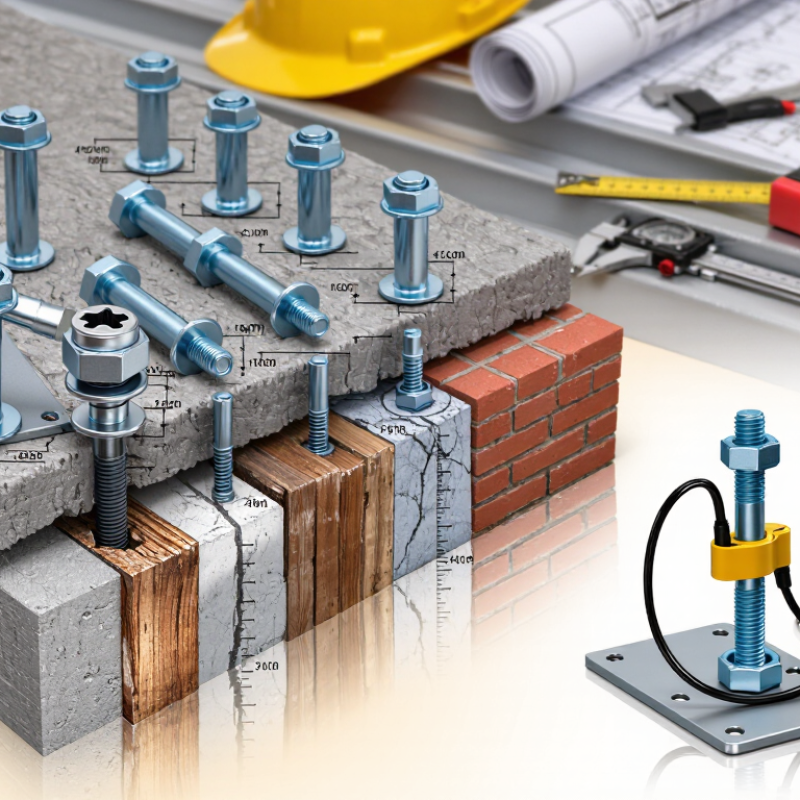
Roof Anchor Pull-Out Strength: OSHA’s 5,000-lbf Anchorage Requirement
A roof anchor must resist more than a worker’s body weight. OSHA generally requires an anchorage to support 5,000 lbf for each attached worker. This requirement applies to fall-arrest anchorages unless a qualified person designs the system differently. An engineered system must usually provide a safety factor of two.
Pull-out strength is only one part of the assessment. The bolt, base material, edge distance, embedment, and installation torque all affect performance. A concrete anchor may look secure while cracked concrete reduces its actual capacity. On a metal roof, thin decking can fail before the bolt does. Small details matter.
During a roof inspection, record the substrate, bolt size, hole depth, spacing, and visible corrosion. Check drawings, test reports, and the applicable OSHA requirements before approving an anchor. Do not treat a manufacturer’s ultimate pull-out value as the permitted working capacity. That difference matters.
Field testing can reveal weak installation, but one test does not prove every anchor is safe. Conditions vary across the roof. I have seen clean-looking assemblies hide loose fasteners or damaged sealing washers. A second review is not excessive when a fall could be fatal. The 5,000-lbf figure is a design benchmark, not permission to guess. Use a qualified person when the existing structure, anchor layout, or rescue plan is uncertain.
It should support at least 5,000 lbf for each attached worker. This is a design benchmark. It is not permission to guess. A qualified person may design an alternative system with a safety factor of two.
No. Embedment, edge distance, substrate quality, spacing, corrosion, and installation torque also matter. A large bolt can still fail in thin decking or cracked concrete. Small details matter.
Record the substrate, bolt diameter, hole depth, spacing, edge distance, torque, and visible corrosion. Photograph cracks, damaged sealing washers, and surface deterioration. Include the roof’s age and moisture conditions. I might miss hidden damage, so a second review helps.
The test applies controlled tensile loading to a representative anchor. Technicians record load, displacement, embedment, substrate condition, and failure mode. Equipment must be calibrated and properly aligned. The test should reflect actual spacing and edge conditions.
No. Roof conditions can vary across a few meters. One strong location may hide weak concrete or loose fasteners elsewhere. Test weaker-looking zones, not only clean areas. One test is not enough.
Compare results with the project design, applicable requirements, and the complete fall-arrest system. Do not use a manufacturer’s ultimate pull-out value as working capacity. Check movement, not only peak load. A high number can still hide excessive displacement.
OSHA generally uses 5,000 lbf per attached worker for an anchorage. EN 795:2012 commonly assesses fixed anchor devices against a 12 kN static requirement, with defined dynamic testing. These values are not directly equivalent. User numbers and system design still need review.
Review it when the structure, anchor layout, rescue plan, or substrate condition is uncertain. Also review unusual corrosion, cracked concrete, thin decking, or missing drawings. Do not approve an anchor by appearance alone. Safety assumptions deserve another look.
This guide explains how roof anchor bolt pull-out strength is evaluated for safe fall-protection design. It begins with OSHA’s 5,000-lbf anchorage requirement and examines how roof-deck materials, bolt type, embedment, washer dimensions, spacing, and edge distances affect resistance. The article also asks, “How to calculate the pull-out strength of a roof anchor bolt?” and presents a practical method for estimating design capacity by applying OSHA’s 2:1 safety-factor approach to expected service loads.
It further describes how pull-out performance can be confirmed through controlled ASTM E488/E488M testing, including proper specimen preparation, loading, and failure observation. Finally, the results should be compared with applicable OSHA 1926.502 requirements and EN 795:2012 criteria, while recognizing that actual capacity depends on the complete roof assembly rather than the bolt alone. A qualified professional should review calculations, test data, installation conditions, and site-specific risks before approval.

