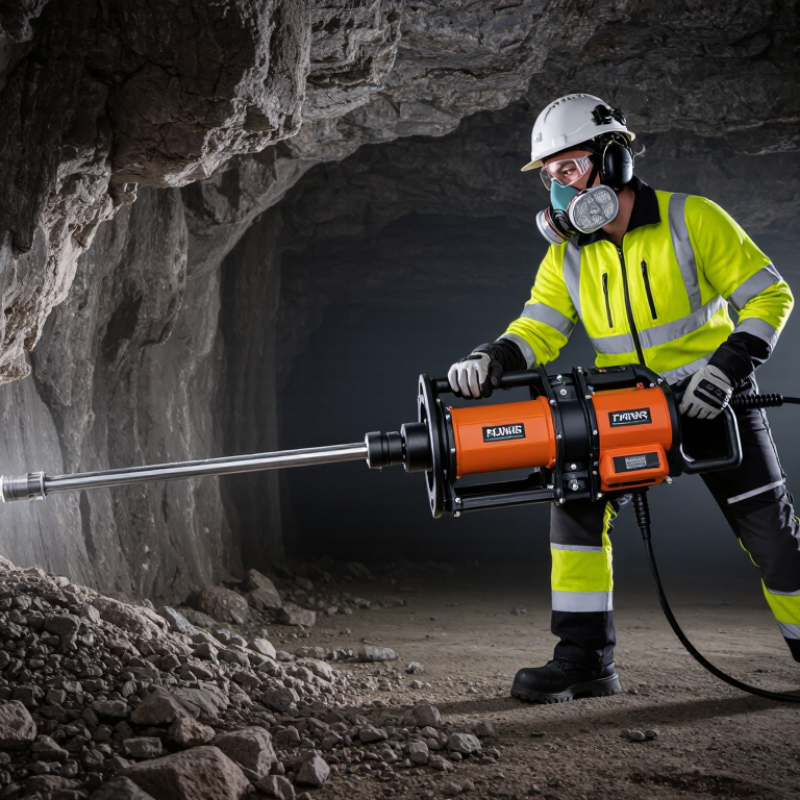
Operating a pneumatic roof bolter demands more than technical skill. It requires disciplined preparation, suitable protective equipment, and constant attention to changing ground conditions. Compressed air, falling rock, sharp steel, dust, noise, and restricted visibility can create serious hazards within seconds. A reliable safety setup should protect the head, eyes, ears, lungs, hands, feet, and body without limiting movement.
What safety gear is required for operating a pneumatic roof bolter? The answer depends on the machine, worksite assessment, manufacturer instructions, and local safety requirements. However, most professional operations consider a certified hard hat, sealed eye protection, hearing protection, respiratory protection, impact-resistant gloves, protective footwear, and high-visibility clothing essential starting points. Some environments may also require face shields, reflective outerwear, or fall protection. PPE must fit correctly. Loose straps and oversized gloves can become dangerous around moving equipment.
This guide examines seven practical safety gear choices for pneumatic roof bolter operators. Each item is considered through real working conditions, not appearance alone. For example, hearing protection should remain comfortable during long drilling cycles, while eye protection must resist dust entering from the sides. Respirators need proper selection and fit testing, not casual use. Even experienced workers can overlook small details when production pressure rises. That weakness deserves attention. Safety gear cannot remove every hazard, but well-chosen equipment can reduce exposure and support safer decisions underground or on demanding job sites. Always inspect equipment before use, replace damaged items, and confirm requirements with qualified site safety personnel.
Hazard Assessment and the Seven-Gear Safety Framework for Roof Bolting
Operating a pneumatic roof bolter begins with hazard assessment, not equipment selection. Falling rock, rotating steel, compressed-air hose movement, silica dust, noise, and poor footing can overlap within seconds. OSHA estimates that about 22 million workers face potentially damaging workplace noise each year. NIOSH recommends controlling exposure before relying on hearing protection alone.
A practical seven-gear framework includes a certified hard hat, sealed safety eyewear, hearing protection, a suitable respirator, cut-resistant gloves, high-visibility clothing, and slip-resistant safety boots. Each item must match the hazard. Glasses should resist impact and dust. Respirators require fit testing and clean-shaven sealing areas. Gloves must protect hands without creating entanglement risks near rotating components. Boots should support the ankle and resist penetration from sharp ground debris.
MSHA safety alerts repeatedly identify roof falls, machinery contact, and powered-equipment incidents as serious mining hazards. That evidence supports layered protection, but gear cannot replace ground control or lockout procedures. Check the air hose, couplings, and tool guards before entry. Keep the work zone visibly clear. Small gaps matter. A damaged visor or loose glove may pass a rushed inspection, yet fail during one sudden movement. The honest weakness in many safety programs is human inconsistency; crews should review near misses and revise the seven-gear assessment regularly.
7 Best Safety Gear for Operating a Pneumatic Roof Bolter
Hazard priority scores reflect the relative importance of controlling common roof-bolting hazards, including falling material, airborne dust, noise, flying particles, struck-by hazards, hand injuries, and foot injuries. Scores are qualitative priorities, not incident-rate statistics.
Safety framework: Use the appropriate gear together with workplace training, equipment guards, site inspections, ventilation, ground-control procedures, and the manufacturer’s operating instructions. PPE must be selected and maintained according to the site’s hazard assessment.
Head, Eye, and Face Protection: ANSI Z89.1 and Z87.1 Impact Standards
Operating a pneumatic roof bolter exposes workers to flying rock, steel fragments, dust, and sudden hose movement. Head protection starts with an industrial helmet meeting ANSI Z89.1. Select the proper type and electrical class from the site hazard assessment.
A secure suspension matters. Adjust it before entering the work area. Inspect the shell for cracks, UV damage, and drilled holes. Replace damaged equipment immediately.
Eye protection should carry the ANSI Z87.1 marking for impact resistance. For high-impact tasks, look for the Z87+ marking.
Safety spectacles protect against fragments, but they may leave gaps around the sides. Sealed goggles provide better coverage against dust and fine particles. Use a face shield over primary eye protection. A shield alone is not enough. That mistake is easy to make.
Keep the visor clean and check for scratches that distort vision. Fogging can tempt workers to lift it during drilling, which creates a dangerous exposure.
A practical seven-item setup includes a helmet, chin strap, safety spectacles, sealed goggles, face shield, hearing protection, and a properly selected respirator.
Respiratory equipment should match measured dust levels and require fit testing when applicable. Hearing protection should not interfere with helmet or eye protection.
Loose straps and oversized frames can cause pressure points, especially during long shifts. A common field error is lifting the shield for a clearer view.
Pause the tool, control the hazard, and then adjust the equipment. Safety gear is only effective when workers inspect, wear, and maintain it consistently.
Hearing Protection: Control Exposure Above the 85 dBA Action Level
A pneumatic roof bolter can create a harsh acoustic environment. Impacting steel, compressed air, and confined mine surfaces amplify each other. Hearing protection must control exposure above the 85 dBA action level.
OSHA’s occupational noise standard sets 85 dBA as the eight-hour time-weighted action level. NIOSH also recommends 85 dBA over eight hours, using a 3 dB exchange rate. This means every 3 dB increase halves the recommended exposure time. At 88 dBA, the recommended duration drops to four hours. At 91 dBA, it becomes two hours. The NIOSH Criteria for a Recommended Standard: Occupational Noise Exposure supports this approach. MSHA’s noise regulations also require monitoring, hearing conservation, and protection when miners face excessive noise. Foam earplugs alone may fail if they are poorly fitted. That is easy to overlook.
Tips: Use fit-tested earplugs with properly rated earmuffs during active bolting. Keep the muff cushions clean and intact. Do not rely on the NRR label alone; real-world protection depends on fit, movement, and combined noise sources. A personal dosimeter can reveal exposure that a short sound-level reading misses. Workers should receive baseline and annual audiograms, as required by applicable workplace rules. In the cab or heading, check communication methods before starting. Shouting is not a hearing-control plan.
Respiratory Protection: NIOSH-Approved Filters for Silica at 50 µg/m³
Operating a pneumatic roof bolter can stir respirable crystalline silica from drilling dust and fractured rock. OSHA’s silica standard sets an eight-hour permissible exposure limit at 50 micrograms per cubic meter, with an action level of 25 micrograms. NIOSH identifies respirable silica as a serious mining hazard linked to silicosis, lung cancer, and chronic respiratory disease. These figures are not abstract. Dust can settle on a visor, collar, and wet gloves within minutes.
A NIOSH-approved respirator with P100 filters is a practical control when exposure assessments require respiratory protection. P100 filters remove at least 99.97% of airborne particles under laboratory testing. They do not remove gases, and they cannot correct poor face fit. A tight-fitting half-mask may provide an assigned protection factor of 10, but measured concentrations, task duration, and local rules still control selection.
Use fit testing, seal checks, clean-shaven contact areas, and a written respiratory program. Replace loaded or damaged filters promptly. Do not wait for breathing resistance.
NIOSH guidance also stresses engineering controls, including water suppression and effective dust capture. Respiratory protection is the backup layer, not the entire plan. A worker may wear the correct filter while drilling beside a failed spray line. That detail matters. Exposure monitoring should represent the operator’s breathing zone, not a quiet corner of the cab. OSHA’s silica technical guidance and NIOSH mining publications support this layered approach, although real underground conditions can be messier than any report.
Hand and Foot Protection: ANSI/ISEA 105 and ASTM F2413 Requirements
Operating a pneumatic roof bolter exposes hands and feet to crushing, cuts, punctures, vibration, and falling hardware. The U.S. Bureau of Labor Statistics recorded more than 80,000 hand injury cases involving days away from work in 2023. The risk is not abstract.
Choose gloves under ANSI/ISEA 105
not by appearance alone. The standard rates abrasion, cut, puncture, and impact resistance. Check the required performance levels against drill-steel edges, bolt plates, and pinch points.
OSHA estimates that about 70.9% of hand and arm injuries involve workers not wearing gloves.
Fit matters too. Loose cuffs can catch during positioning. Tight gloves can reduce grip and encourage unsafe removal. A rating is helpful, but it cannot replace a task-specific assessment.
ASTM F2413 footwear
should match the bolter’s ground conditions and falling-object hazards. Look for certified impact and compression toe protection, then consider puncture resistance and metatarsal protection when site risks demand them. Keep soles clean and stable around wet rock, dust, and hydraulic residue.
Footwear that passes the standard may still fail in practice if it is worn, poorly fitted, or paired with damaged laces.
NIOSH research also links repeated hand-arm vibration exposure with vascular and nerve problems. We sometimes focus on dramatic crush injuries and overlook vibration. That is a mistake worth revisiting.
High-Visibility Clothing and Fall Protection Under ANSI/ISEA 107 and OSHA Rules
Operating a pneumatic roof bolter demands seven essential protections: a hard hat, safety glasses, hearing protection, gloves, safety boots, high-visibility clothing, and fall protection. ANSI/ISEA 107 helps classify high-visibility garments by background material, reflective material, and visibility risk. Choose the class required by the worksite assessment, not by color alone. Dust, dim lighting, and moving equipment can quickly hide a worker’s outline.
Fall protection must follow the applicable OSHA requirements and the site’s written plan. A properly fitted harness, approved lanyard or self-retracting lifeline, and suitable anchorage work as one system. Inspect webbing for cuts, burns, crushed stitching, or chemical damage before entering the roof area. Keep pneumatic hoses and lifelines separated. A tangled line can create a serious hazard during repositioning.
Tips: Wear the high-visibility vest over bulky layers, but never cover reflective bands with tools or straps. Check that reflective areas remain clean. Test communication before drilling begins. A competent person should verify anchorage, clearance, and rescue arrangements. I have seen workers inspect the harness but forget the connecting device. That small omission matters. Replace damaged equipment immediately, even when the defect looks minor.
Conclusion
What safety gear is required for operating a pneumatic roof bolter? A complete safety setup begins with a hazard assessment covering falling materials, flying debris, excessive noise, airborne silica, hand injuries, foot hazards, poor visibility, and potential falls. Head protection should meet ANSI Z89.1 requirements, while safety glasses or face shields should comply with ANSI Z87.1 impact standards. Hearing protection is essential when exposure may exceed the 85 dBA action level, and respiratory protection should use NIOSH-approved filters suitable for controlling silica exposure at the 50 µg/m³ limit.
Workers should also wear task-appropriate gloves evaluated under ANSI/ISEA 105 and protective footwear meeting ASTM F2413 requirements. High-visibility clothing that follows ANSI/ISEA 107 helps operators remain visible around equipment and in low-light areas. Where elevated work or unprotected edges are present, properly selected and inspected fall-protection equipment must be used in accordance with applicable OSHA rules. All gear should fit correctly, be maintained regularly, and be supported by training and pre-shift inspections.

