2026 Best Dust Control for Dry Pneumatic Anchor Drilling

Time:2026-11-04 Author:Oliver
0%

Dry pneumatic anchor drilling can send a visible plume across a work area within seconds. The finer respirable dust is harder to see, yet it can travel beyond the drill point. OSHA’s construction silica standard sets a permissible exposure limit of 50 micrograms per cubic meter, averaged over eight hours, and an action level of 25 micrograms. These United States benchmarks help frame risk; they do not prove a particular drilling setup is safe. NIOSH guidance also identifies exposure to respirable crystalline silica as a serious occupational health concern.

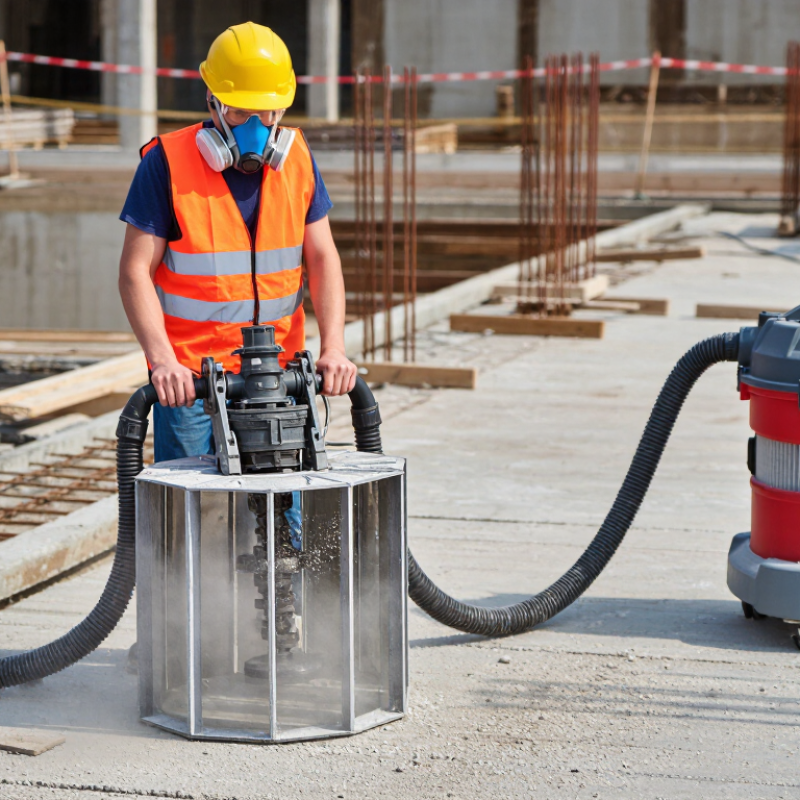
How to control dust emissions during dry pneumatic anchor drilling? Start at the source. A close-fitting drill shroud connected to a properly selected dust extractor can capture dust before it spreads. Check that the hose is not split or blocked, the shroud seats around the drill, and the filter is maintained according to its manufacturer’s instructions. Small leaks matter. So does poor positioning: a strong extractor cannot reliably capture dust if the shroud sits away from the hole.

This guide compares practical control options, including source capture, equipment checks, work practices, and exposure monitoring. Use a competent assessment to select controls for the rock, drill, and site conditions. Suitable respiratory protection may still be needed, but it should not replace effective engineering controls. No setup is perfect. Dust can escape during bit changes, cleanup, or awkward drilling angles, and those moments are easy to overlook. Verify performance with workplace measurements where appropriate, and follow current local requirements and equipment guidance.
2026 Best Dust Control for Dry Pneumatic Anchor Drilling

How Dust Forms During Dry Pneumatic Anchor Drilling

During dry pneumatic anchor drilling, compressed air drives repeated impacts that fracture rock around the bit. Each impact breaks material into chips and smaller fragments; rotation helps the bit cut fresh surfaces. The bit grinds rock into a mix of coarse cuttings and fine dust. Fine particles escape. Without water to wet and bind the fines, they remain loose and mobile. As compressed air travels upward through the gap between the drill steel and the hole wall, it carries cuttings toward the collar. There, fast-moving air can disperse the lightest particles into a visible plume.

Dust release varies with rock strength, moisture, fractured zones, airflow, and bit condition. Dry, friable ground often produces more fines, while damp material may keep some particles clumped. A worn or unsuitable bit can also change how the rock breaks. The pattern is not always neat. Two nearby holes may produce different plumes, and a visible cloud does not reveal every airborne particle. That picture is incomplete. Observing where dust escapes—at the hole collar, around connections, or from the discharged cuttings—helps explain how it forms and where containment may be needed.

Key Health and Safety Risks of Drilling Dust

2026 Best Dust Control for Dry Pneumatic Anchor Drilling

Key Health and Safety Risks of Drilling Dust

Dry pneumatic drilling can send a fine plume past the anchor hole and across nearby work areas. Dust travels far. Larger particles may irritate eyes, skin, and airways, while smaller respirable particles can reach deep into the lungs. Some particles are tiny.

The risk depends on the material being drilled. Concrete, masonry, and some stone may contain crystalline silica; repeated inhalation can cause serious, lasting lung disease. Dust can also settle on tools, clothing, and surfaces, then become airborne again when disturbed. A clean-looking site is not proof of safe air.

Capture dust close to the bit with a well-fitted shroud and a suitable extraction system. Check seals, hoses, and filters before drilling; a loose connection can leave a visible trail. Keep bystanders clear, and avoid dry sweeping or blowing dust with compressed air. Use respiratory protection selected for the task and properly fitted, alongside engineering controls—not as a replacement for them. Conditions change with each material and site, so inspect the setup and adjust when dust escapes. That step is easy to overlook.

Dust Control Methods and Equipment for Anchor Drills

Dry pneumatic anchor drilling can send fine mineral dust past the operator before a plume is visible. A close-fitting drill shroud paired with a dust collector captures particles at the bit. Keep the hose short, check for leaks, and use the collector’s filter-cleaning function. Small leaks matter. A poorly seated shroud can undermine an otherwise capable setup.

For concrete and masonry work in the United States, OSHA’s construction silica standard sets an action level of 25 micrograms per cubic meter and a permissible exposure limit of 50, measured as an eight-hour average. OSHA’s 2016 silica rule analysis estimated that the rule would prevent more than 600 deaths and 900 new silicosis cases each year. Its Table 1 specifies dust-collection controls for handheld and stand-mounted drills. These figures give crews a reason to verify controls, not assume they work.

Before drilling, inspect the shroud seal, hose, and filter indicator; then watch for dust escaping around the hole. Use a HEPA-filtered vacuum for settled dust, rather than dry sweeping or blowing it away with compressed air. Still, field setups are rarely perfect: tight corners, worn bits, and clogged filters can reduce capture. Where exposure may exceed limits, workplace sampling can help confirm whether the chosen controls are adequate.

How to Compare Dust Collection Performance in 2026

A fair comparison of dust collection in 2026 starts with the complete drilling setup, not a vacuum’s airflow rating alone. For dry pneumatic anchor drilling, keep the hole diameter, depth, drill angle, and substrate consistent. Small changes matter. Watch the shroud as the bit enters and exits the material. Look for dust escaping around the collar or settling on nearby surfaces.

Check collection with both a clean filter and one used through repeated holes. Note airflow changes, filter loading, cleanup time, and how much dust reaches the collection container. A system may collect coarse debris well while allowing finer particles to escape. Visible dust is only a clue, not a reliable exposure measurement. Where available, compare breathing-zone sampling conducted by a qualified occupational hygienist under consistent conditions.

Record the results, including room ventilation and operator technique. These details make comparisons more useful than a single pass or a manufacturer’s headline figure. Even a careful test has limits: different concrete mixes and worn shrouds can change performance. I would also repeat the test on another day. It takes time, but one clean result can be misleading.

Selecting, Operating, and Maintaining a Dust Control System

Choosing dust control for dry pneumatic anchor drilling starts with the drill, bit diameter, and expected hole depth. Match the collector’s airflow and filter capacity to the tool’s requirements, not just its advertised power. A close-fitting shroud helps capture dust at the hole. Check that hoses are wide enough and free of sharp bends. Small restrictions matter.

Set up the collector before drilling. Seat the shroud against the surface, start extraction, then drill with steady pressure. Watch the connection as the bit advances; vibration can loosen a hose or shift the shroud. If dust escapes, stop and check the seal, airflow, and filter loading. Don’t treat a visible plume as normal. It can signal a setup problem.

Maintenance is part of the system, not an afterthought. Inspect hoses, seals, and filter condition at the start of each shift. Empty the dust container using a method that limits re-entry into the air, and follow the collector’s instructions for filter cleaning or replacement. Keep a simple log of clogs and weak suction. It may reveal a pattern, though records are easy to neglect on a rushed job. The right setup still needs regular attention.

FAQS

Why is dry pneumatic drilling dust a health concern?

Fine dust can travel beyond the anchor hole. Smaller particles may reach deep into the lungs.

Which materials may contain crystalline silica?

Concrete, masonry, and some stone may contain it. Repeated inhalation can cause lasting lung disease.

Does a clean-looking worksite mean the air is safe?

No. Dust can settle on clothing, tools, and surfaces, then become airborne again.

How can workers capture dust near the drill bit?

Use a well-fitted shroud with a suitable extraction system. Check seals, hoses, and filters before drilling.

What should workers do if dust escapes?

Inspect the setup and adjust it. Keep bystanders away, and avoid dry sweeping or compressed air.

How should dust collection systems be compared?

Keep hole size, depth, drill angle, and substrate consistent. Check the shroud as the bit enters and exits.

What should a collection test record?

Note filter condition, airflow changes, cleanup time, and dust reaching the container. Record ventilation and operator technique too.

Is visible dust a reliable measure of exposure?

No. It offers only a clue. Qualified breathing-zone sampling can provide a more useful comparison.

Why repeat tests on another day?

Concrete mixes and worn shrouds can change results. One clean test may be misleading, though repeating it takes time.

Conclusion

Dry pneumatic anchor drilling generates dust when compressed air breaks apart rock, concrete, or other materials and carries fine particles into the surrounding air. Exposure can affect workers’ health, reduce visibility, and leave dust on nearby equipment and surfaces. How to control dust emissions during dry pneumatic anchor drilling? Start by matching a suitable collection or capture system to the drill and working conditions, and use effective airflow and filtration to contain airborne particles as close to the drilling point as possible. Where appropriate, additional measures such as a properly designed shroud or localized extraction can improve containment.

In 2026, compare systems by their ability to capture dust, maintain airflow, filter fine particles, and operate reliably during the intended workload—not by a single performance claim. Consider ease of setup, compatibility, filter capacity, and maintenance needs. Before each job, inspect connections, hoses, filters, and collection components; operate the system as directed; and replace or clean parts when needed. Consistent operation, routine maintenance, and suitable worker protection help support safer, cleaner drilling conditions.

Oliver

Oliver

Oliver is a seasoned marketing professional with a wealth of expertise in driving brand awareness and engagement. With a deep understanding of our company's product offerings, he consistently delivers high-quality content that enriches our professional blog. His insights not only shed light on......