Top 10 Differences Handheld Rock Drill vs Track Mounted Rig?

Time:2026-09-24 Author:Ethan
0%

Choosing drilling equipment is rarely a simple matter of power. Ground conditions, access, production targets, operator skill, and site mobility all shape the decision. This guide examines the top 10 differences between a handheld rock drill and a track-mounted rig, with practical details from real construction, quarrying, and underground work.

So, When to use a handheld rock drill vs a track-mounted rig? Dr. John Hadjigeorgiou, a respected mining engineering researcher, offers a useful principle: “Equipment selection must reflect the ground conditions, the operating environment, and the required level of control.” That idea matters on site. A handheld drill may suit a narrow tunnel, scattered bolt holes, or a short repair task. It is portable, comparatively simple, and fast to reposition. Yet vibration, operator fatigue, uneven drilling, and limited depth can reduce consistency.

A track-mounted rig brings stability, reach, hydraulic power, and more repeatable hole placement. It can handle larger patterns and deeper drilling, but it needs wider access, transport planning, and a larger working area. The cheaper-looking option may not remain cheaper after delays, fuel use, maintenance, and safety controls are considered. That is easy to overlook.

This comparison is not a rigid rulebook. Rock quality changes. Access changes. Crews make mistakes. Even experienced contractors should reassess the choice before mobilization. A careful site inspection, trial drilling, and clear production estimate usually reveal which machine fits the work—not merely which machine appears stronger.
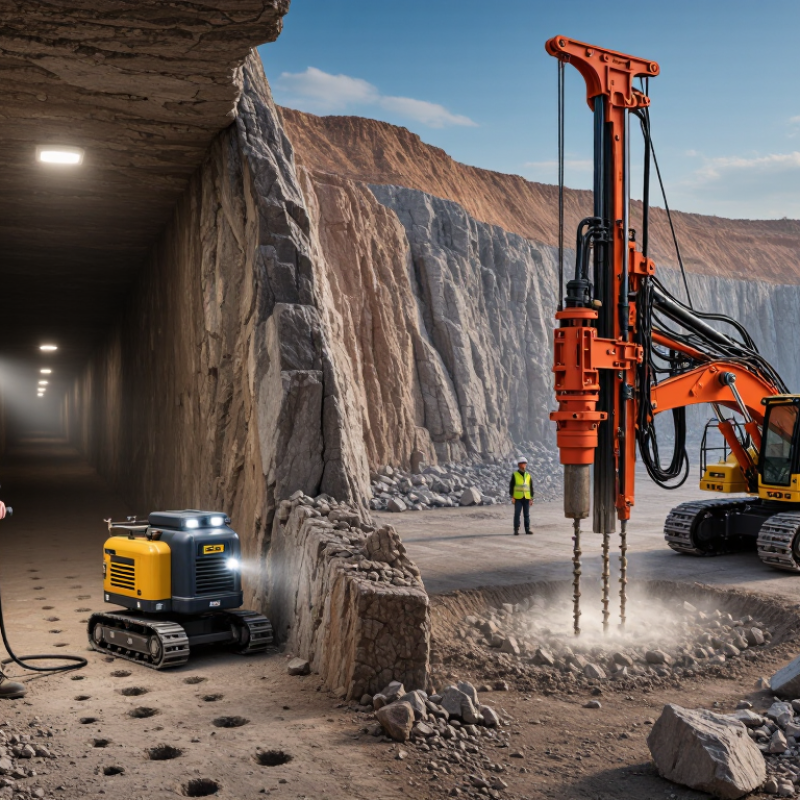
Top 10 Differences Handheld Rock Drill vs Track Mounted Rig?

What Are Handheld Rock Drills and Track Mounted Rigs?

A handheld rock drill is a portable tool operated directly by a worker. It delivers repeated impact through a drill steel to break rock, making it useful for small jobs, confined spaces, and locations where larger equipment cannot reach. The operator guides the drill and manages its weight, vibration, and alignment. It offers flexibility, but sustained use can be physically demanding, and accuracy depends partly on operator control.

A track mounted rig carries its drilling equipment on crawler tracks. The platform moves across uneven ground and supports a mast that positions the drill. Depending on its configuration, the rig can handle longer holes or repeated drilling patterns with less manual handling of the drill itself. It needs room to travel and set up, though, and ground conditions still matter. Tracks do not make every slope or surface safe.

Tips: Match the machine to the rock, hole depth, access, and work duration. Check the manufacturer’s operating guidance, inspect bits and hoses, and secure the work area before drilling. Small details matter. I’ve seen a planned setup lose time because the rig could not turn around near the face; site access deserves a real check, not a guess.

Top 10 Differences: Handheld Rock Drill vs. Track-Mounted Rig

What are handheld rock drills and track-mounted rigs? Compare their typical strengths across ten practical factors.

How to read this chart: Scores are qualitative, illustrative ratings from 1 (lower) to 5 (higher), based on typical equipment characteristics—not standardized test results. Actual performance varies with drill model, rock conditions, hole size, and operator.

How Their Operating Systems and Power Sources Differ

A handheld rock drill puts power directly into the operator’s hands. Pneumatic models use compressed air from a separate compressor; hydraulic versions draw pressurized fluid from a power pack. The operator advances the bit while managing recoil, hose drag, and vibration. A track-mounted rig works differently. Its engine or electric supply powers hydraulic pumps, which drive the feed, rotation, and positioning systems. The operator controls the drill from the machine, while the tracked chassis stabilizes it on uneven ground. That separation matters. One system depends on a person’s grip and stance; the other depends on machine setup and hydraulic performance.

Power source affects more than convenience. A handheld pneumatic drill needs a compressor sized for its required air pressure and flow, so undersized supply can slow drilling. A track rig with a diesel engine brings fuel logistics and exhaust considerations. The U.S. Environmental Protection Agency’s nonroad diesel engine standards describe Tier 4 controls that reduce particulate matter by up to 90% and nitrogen oxides by about 50% compared with earlier standards. These figures concern engine emissions, not drilling productivity. Still, they matter when selecting equipment for enclosed or sensitive sites. Real-world performance can vary. It is easy to overlook hose losses, maintenance, and operator fatigue.

Tips: Check the drill’s air or hydraulic requirements against the actual supply, not just the equipment label. For a track rig, inspect hydraulic lines, filters, and engine ventilation before work. Small checks help.

Comparing Drilling Capacity, Mobility, and Worksite Access

A handheld rock drill suits short holes, narrow headings, and jobs where the operator must reposition often. Its drilling capacity depends on rock hardness, bit condition, air supply, and operator technique. In practice, a small change in feed pressure can affect progress noticeably. The tool is easy to carry between nearby locations. That matters on steep cuts, inside confined areas, or where a vehicle cannot reach the face. But the operator bears the weight and vibration, so long drilling shifts can become tiring.

A track-mounted rig brings greater stability and can support longer, larger-diameter drilling patterns. Its feed system helps maintain consistent pressure, especially when holes must align across a broad bench. It also carries the compressor or related equipment more readily, depending on the setup. There is a trade-off. The rig needs room to travel, turn, and set up; soft ground or tight access can slow it before drilling begins. Tracks improve movement over uneven terrain, but they do not make every worksite accessible.

Compare the actual hole plan, not just the machine’s rated capacity. Measure access width, turning space, ground conditions, and the distance between drilling points. A handheld drill may be more productive where setup time dominates. A track rig may save time across a large, repetitive pattern. Neither choice is automatic. I would also allow for imperfect conditions: wet rock, worn bits, and awkward positioning can change the day’s output more than expected.

Differences in Safety, Labor Requirements, and Operator Control

Safety depends on more than the drill itself. A handheld rock drill transfers vibration and reaction force directly to the operator, so a secure stance, firm grip, and suitable protective equipment matter on every hole. On uneven ground, the operator may need to reposition often. Fatigue can build quietly. Dust control and clear communication also require attention, especially when a helper stands nearby.

A track-mounted rig supports the drilling equipment on a stable platform and can often be operated from a dedicated station. This may reduce direct handling and keep workers farther from the drill steel, but it does not remove risk. Tracks can settle on loose ground, and moving the rig needs careful coordination. Controls also demand training: the operator must monitor feed pressure, alignment, and changing rock conditions. Small corrections matter.

Labor needs differ in practice. Handheld work may suit a small crew and tight access, yet workers must manage the tool, hose, and hole setup themselves. A mounted rig can reduce repeated manual positioning, though transport, setup, and maintenance may require extra time or people. Neither setup is automatically safer or easier. Site conditions decide, and that judgment can be imperfect. Operators should pause when footing, visibility, or control feels uncertain.

Choosing the Right Drill for Ground Conditions and Project Scale

Choosing between a handheld rock drill and a track-mounted rig depends on ground conditions and project scale. A handheld drill suits short holes, narrow access, and scattered work areas. It can reach steep faces where machines cannot fit. However, vibration, noise, and operator fatigue become serious concerns after several hours. It is demanding work.

A track-mounted rig offers better stability on hard, uneven ground. Its feed system supports deeper holes, consistent angles, and faster production. Larger sites, quarry benches, foundation work, and repeated drilling usually justify its transport and setup time. In fractured rock, a stable mast can reduce wandering and improve hole accuracy. Yet soft overburden, tight corridors, or weak access roads may limit its value.

Ground investigation should guide the decision. Check rock hardness, joint spacing, groundwater, bench height, and required hole diameter before mobilization. A handheld unit may perform well in broken rock, but it can struggle in dense, competent stone. A track rig may deliver excellent output, but poor ground preparation can create delays and unsafe positioning. Scale changes everything.

Field crews should compare daily drilling meters, fuel or compressor demand, access costs, and maintenance support. A low purchase price does not always mean a lower project cost. I have seen simple access assumptions distort equipment choices. A trial hole can reveal more than a spreadsheet, although even that test may not represent every section of the site.

FAQS

What is a handheld rock drill?

It is a portable tool guided directly by a worker. It uses repeated impact through drill steel to break rock. It suits small jobs and confined spaces.

What is a track-mounted drilling rig?

It carries drilling equipment on crawler tracks. The tracks move across uneven ground, while a mast positions the drill. It suits longer holes and repeated drilling patterns.

When is a handheld drill a practical choice?

Choose it when access is tight or larger equipment cannot reach. It may suit a small crew and short drilling tasks. The operator must manage weight, vibration, hoses, and alignment.

What are the main physical concerns with handheld drilling?

Vibration and reaction force transfer directly to the operator. A secure stance, firm grip, and suitable protective equipment are important. Fatigue builds quietly.

Does a track-mounted rig remove drilling risks?

No. It can reduce direct handling and keep workers farther from drill steel. Loose ground may still cause tracks to settle. Moving the rig requires careful coordination.

Which option usually needs more manual positioning?

Handheld drilling usually requires more direct handling. Workers reposition the tool, hose, and hole setup themselves. A mounted rig reduces repeated positioning but may need setup support.

What should operators check before drilling?

Check the rock, hole depth, access, and expected work duration. Inspect bits and hoses before starting. Secure the work area and confirm clear communication.

Can tracks safely cross every slope or surface?

No. Tracks improve movement, but they do not make every surface safe. Check slope, ground firmness, turning space, and setup room. Access can decide everything.

How can a team choose between the two drilling methods?

Compare access, drilling duration, hole length, ground conditions, and available labor. A handheld drill may fit a narrow face. A mounted rig may perform better where repeated holes need stable alignment. The judgment can be imperfect, so pause when visibility or control feels uncertain.

Conclusion

Handheld rock drills and track-mounted rigs are designed for different drilling demands. Handheld models are compact, portable tools powered by electricity, air, or hydraulics, making them practical for small repairs, confined areas, light construction, and locations with limited access. Track-mounted rigs use a mobile tracked platform and a larger power system, allowing them to deliver greater drilling force, depth, accuracy, and stability across challenging ground. Their tracks also help them move over uneven terrain while reducing the need for manual carrying.

The main differences involve drilling capacity, mobility, worksite access, safety, labor, and operator control. Handheld drills usually require more physical effort and close operator involvement, while track-mounted rigs can improve productivity and reduce strain through mechanized controls. When to use a handheld rock drill vs a track-mounted rig? Choose a handheld model for short, flexible, or space-restricted tasks, and select a track-mounted rig for large-scale projects, hard ground, repeated drilling, deeper holes, or demanding outdoor conditions.

Ethan

Ethan

Ethan is a seasoned marketing professional with a deep expertise in our company's innovative product line. With a passion for sharing knowledge and insights, he takes the lead in regularly updating our corporate blog, where he explores industry trends, product features, and effective marketing......