7 Tips to Reduce Handheld Rock Drill Vibration Exposure?

Time:2026-10-19 Author:Charlotte
0%

Handheld rock drills deliver force where it matters, but that force also travels into the operator’s hands, wrists, and arms. Repeated exposure can cause numbness, tingling, reduced grip strength, and painful stiffness. The risk often grows quietly during long shifts, especially when drilling hard stone in cold or wet conditions.

How to reduce vibration exposure when using handheld rock drills? The answer involves more than wearing gloves. Equipment selection, maintenance, drilling technique, work rotation, warm conditions, and early symptom reporting all influence exposure. This guide explains seven practical controls used by experienced operators and supported by occupational health guidance from organizations such as NIOSH and HSE. Manufacturer instructions remain essential because vibration levels differ between drill models, bits, pressures, and materials.

Some controls seem obvious. They are still missed. A worn bit can force an operator to push harder, increasing vibration through the handles. Holding the drill too tightly may also transfer more vibration, although loosening the grip without losing control requires practice. That detail deserves attention. Workers should not ignore persistent tingling or assume symptoms will disappear after rest. A supervisor or qualified occupational health professional can help assess the work pattern and recommend appropriate action. No single measure removes the hazard completely. However, combining several small improvements can reduce daily exposure and make drilling safer, steadier, and less physically demanding.
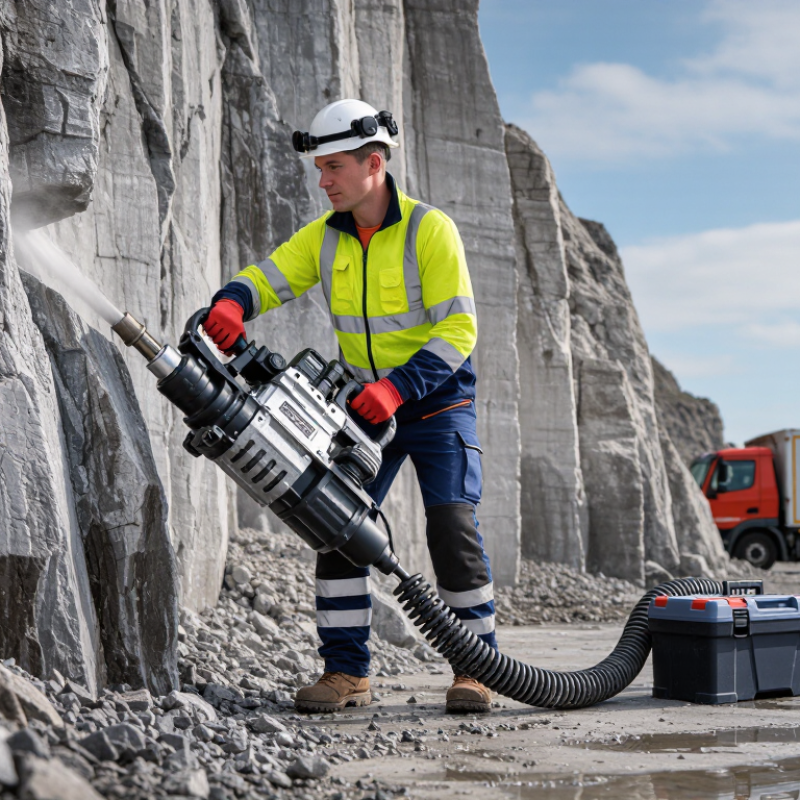
7 Tips to Reduce Handheld Rock Drill Vibration Exposure?

Understanding Vibration Risks from Handheld Rock Drills

Handheld rock drills can transmit intense vibration through the palms, fingers, and forearms. The risk increases when drilling lasts for hours, especially in cold or wet conditions. Repeated exposure may contribute to hand-arm vibration syndrome, causing tingling, numbness, weaker grip, or pale fingers. These signs deserve prompt medical attention.

Reduce exposure by limiting trigger time and rotating tasks with coworkers. Keep both hands relaxed, but maintain firm control. Excessive gripping can increase vibration transfer. Select a drill with lower declared vibration emission, then compare that figure with real working conditions.

Inspect bits, handles, and dampers regularly. Worn components may create harsher vibration and reduce drilling efficiency. Keep hands warm and dry. Cold fingers have poorer circulation. Anti-vibration gloves may help with comfort, but they cannot replace exposure controls or safe work planning. Use health surveillance where workplace rules require it.

A practical record helps. Note drilling minutes, breaks, ground conditions, and unusual tool movement. Small details matter. Many workers track the shift, but forget short drilling periods scattered throughout the day. That can underestimate total exposure. Supervisors should review measurements, manufacturer data, and worker symptoms together. A qualified occupational health professional can interpret warning signs and recommend further assessment. Stop and report persistent numbness, pain, or color changes. The aim is not simply finishing the hole. It is controlling vibration before temporary discomfort becomes lasting injury.

Selecting Low-Vibration Drills and Suitable Accessories

7 Tips to Reduce Handheld Rock Drill Vibration Exposure

Selecting a low-vibration drill is the most practical starting point. Check its declared vibration value in m/s², not only its noise rating. EU Directive 2002/44/EC sets an action value of 2.5 m/s² A(8) and a limit value of 5.0 m/s² A(8). These figures assume real operating conditions. Manufacturer testing may not reflect hard, uneven rock.

Tip 1: Compare measured vibration data from independent tests, where available. Tip 2: Choose drills with effective isolation handles and balanced tool weight. Tip 3: Match the drill, bit, and shank system correctly. A worn or poorly fitted accessory can increase vibration and reduce drilling control. HSE guidance L140 also stresses maintenance, exposure assessment, and limiting trigger time.

Use sharp, suitable bits and replace damaged accessories early. Do not force the drill into the rock; excessive feed pressure often creates more vibration. I have seen operators grip harder when the tool shakes, which can worsen hand-arm loading. That response feels natural, but it needs correction. Tip 4: Rotate tasks and record daily exposure using the tool’s vibration value and operating time. Tip 5: Keep handles clean, dry, and free from oil. Anti-vibration gloves may help with comfort, but NIOSH cautions that they should not replace engineering controls or exposure reduction. Personal assumptions remain a weakness. Field measurements are better.

7 Tips to Reduce Handheld Rock Drill Vibration Exposure

Selecting Low-Vibration Drills and Suitable Accessories

The chart shows the theoretical trigger time at one constant vibration magnitude that reaches the EU daily vibration action value of 2.5 m/s² A(8) or the exposure limit value of 5.0 m/s² A(8). Calculations use A(8) = ahv × √(T/8), where T is trigger time in hours.

To reduce exposure, select drills with lower declared vibration emission, use compatible damped handles and bits, keep accessories sharp and correctly fitted, maintain the drill, avoid excessive feed force, rotate tasks, and record actual trigger time. The values are calculated reference points based on the thresholds in EU Directive 2002/44/EC; always verify the tool’s declared vibration value and workplace measurements.

Improving Grip, Posture, and Drilling Technique

Handheld rock drills can transmit strong vibration through the hands, wrists, elbows, and shoulders. A relaxed grip helps reduce that transfer. Hold the handles firmly, but do not squeeze until your knuckles whiten. Keep both wrists straight and let your arms move naturally. Tight muscles fatigue quickly. They also amplify discomfort.

Stand with feet shoulder-width apart and place one foot slightly forward. Keep your back neutral, knees gently bent, and shoulders level. Avoid leaning your full body weight onto the drill. Let the tool’s feed force do the work. Keep the bit aligned with the drilling surface. A crooked bit creates extra resistance and more vibration. Move closer instead of stretching your arms. This small adjustment protects posture.

Use short drilling intervals and change hand position when the task allows. Rest before numbness appears, not after it becomes severe. Wear suitable protective gloves, but never treat them as complete vibration control. Inspect the bit and handles regularly, since damaged parts can increase shaking. I still catch myself gripping too hard when the rock becomes stubborn. That habit needs correction. A supervisor or occupational health professional can review technique and measure exposure when symptoms continue. Stop and report persistent tingling, weakness, or loss of sensation.

7 Tips to Reduce Handheld Rock Drill Vibration Exposure? - Improving Grip, Posture, and Drilling Technique
Tip Risk-Control Dimension Recommended Practice Why It Helps Practical Performance Indicator Verification Method
1 Use the correct grip Grip force and tool control Hold the drill firmly enough to maintain control, but avoid squeezing the handles harder than necessary. Keep the wrists as straight and neutral as the task allows. Excessive grip force can increase muscle fatigue and may reduce blood circulation in the hands. A controlled, relaxed grip helps maintain tool stability without adding unnecessary hand loading. The operator can control the tool without white-knuckling, wrist bending, or frequent grip readjustment. Observe grip posture during drilling and ask the operator to report hand fatigue, numbness, or tingling.
2 Improve body posture Whole-body alignment and force transfer Stand with balanced footing, keep the tool close to the body, maintain a neutral back, and avoid twisting or leaning excessively into the drill. A balanced posture improves control and allows the legs and body to help resist reaction forces, reducing unnecessary loading on the hands, wrists, shoulders, and lower back. Feet remain stable, shoulders are relaxed, and the operator does not support the tool primarily with the wrists or forearms. Conduct a brief posture observation at the start of work and after work conditions change.
3 Let the drill do the work Feed force and drilling technique Apply steady, manufacturer-specified feed pressure. Do not force the bit when penetration slows, the bit binds, or the material changes. Excessive force can increase transmitted vibration, reduce drilling efficiency, and raise the chance of tool kickback or bit binding. Drilling pressure remains steady; the operator does not repeatedly push harder to compensate for a dull bit, unsuitable bit, or blocked hole. Supervisors should watch for stalled rotation, excessive noise, tool bouncing, or visible operator strain.
4 Maintain bits and the tool Equipment condition and vibration generation Keep drill bits sharp and correctly fitted. Inspect handles, mounts, couplings, hoses, lubrication, and anti-vibration components according to the equipment maintenance schedule. Worn bits, loose parts, poor lubrication, and mechanical faults can increase vibration, noise, drilling time, and the force required from the operator. No loose components, abnormal rattling, damaged handles, air leaks, or visibly worn drilling parts are present before use. Record pre-use inspections and remove defective equipment from service until repaired.
5 Limit continuous exposure Exposure duration and work organization Use planned task rotation, short recovery pauses, and alternative duties where feasible. Do not assume that a break eliminates exposure if other vibrating tools are used during the shift. Daily hand-arm vibration exposure depends on both vibration magnitude and total vibration time. Reducing the time spent operating vibrating tools reduces daily exposure. Track actual trigger time or operating time for each vibrating tool rather than counting the entire shift. Review daily task records and calculate the combined exposure from all relevant vibrating tools.
6 Keep hands warm and dry Circulation and environmental conditions Use suitable weather protection, keep gloves and clothing dry, and avoid unnecessary exposure to cold, wet conditions, and nicotine-related circulation effects. Cold and damp conditions can reduce blood flow in the fingers and may worsen symptoms associated with hand-arm vibration exposure. Hands remain warm and dry, and the operator is not required to continue drilling with numb or unusually pale fingers. Include temperature, wetness, and reported circulation symptoms in routine safety checks.
7 Measure and manage exposure Exposure assessment and health surveillance Obtain vibration emission information for the actual tool and accessory combination, measure exposure when needed, and combine exposure from all vibrating tools used during the workday. Hand-arm vibration risk cannot be judged reliably from tool appearance alone. Daily exposure is commonly expressed as the 8-hour energy-equivalent acceleration, A(8). Use the relationship A(8) = ahv × √(T / 8), where ahv is the vibration magnitude in m/s² and T is exposure time in hours. As a reference used in European regulation, the action value is 2.5 m/s² A(8) and the limit value is 5.0 m/s² A(8). Apply the requirements of the relevant local regulations and seek occupational-health advice when symptoms occur.

Note: Hand-arm vibration exposure is affected by tool condition, material, bit selection, operating technique, grip force, and actual trigger time. Emission values supplied by manufacturers are useful for screening but may not represent field exposure under every drilling condition.

Scheduling Work Breaks and Limiting Daily Exposure

Scheduling work breaks is one of the most practical ways to reduce handheld rock drill vibration exposure. However, a break only helps when workers stop using vibrating equipment completely. Moving from a rock drill to another vibrating tool does not provide meaningful recovery. Record actual trigger time, not the entire shift, because vibration exposure builds through repeated contact.

Plan short, regular pauses before fatigue becomes obvious. For example, a crew might drill for a controlled period, then rest in a warm, dry area. Cold hands can reduce circulation and make symptoms worse. During breaks, workers should loosen their grip, stretch their fingers gently, and check for numbness, tingling, or unusual weakness. Keep the hands warm.

Rotation can lower individual exposure, but it must be designed carefully. A worker should not replace drilling with another high-vibration task. Supervisors should compare the planned schedule with equipment data, risk assessments, and applicable workplace guidance. Daily exposure limits vary by location and task, so a qualified safety professional should review uncertain cases.

A schedule can look perfect on paper and still fail in the field. Delays often encourage workers to skip breaks. That is a warning sign. If symptoms continue after rest, report them promptly and arrange professional medical advice. Small adjustments matter, though they may feel inconvenient during busy production periods.

Maintaining Equipment and Monitoring Worker Health

Handheld rock drills can transmit intense vibration through the hands, wrists, and arms. Equipment care is one of the most practical controls. Inspect the drill before each shift. Check the bit, chuck, handles, hoses, fasteners, and lubrication points. Replace worn parts promptly. A blunt bit often forces the operator to grip harder. That increases exposure.

Keep a simple maintenance log. Record unusual noise, heat, reduced impact, and repeated repairs. Measure vibration when possible, especially after servicing or changing drill bits. Correct air pressure matters too. Excess pressure can increase vibration and damage components. Operators should use a relaxed grip, stable footing, and short work periods. Anti-vibration gloves may help, but they cannot repair faulty equipment.

Worker health monitoring deserves equal attention. Supervisors should ask about numbness, tingling, reduced grip strength, pale fingers, or aching hands. These signs should never be dismissed as ordinary tiredness. Encourage early reporting and arrange assessment by a qualified occupational health professional. Rotate tasks and schedule warm, dry recovery breaks. Cold conditions can worsen circulation problems.

A checklist is not magic. It may also be ignored during production pressure. Brief, visible inspections usually work better than paperwork alone. One missed loose handle can change the whole shift. Review maintenance records and worker feedback together. The most useful control is often the one people consistently follow.

FAQS

What health problems can handheld rock drill vibration cause?

Repeated vibration may cause tingling, numbness, weaker grip, aching, or pale fingers. These signs matter. Seek qualified medical advice promptly.

How can workers reduce daily vibration exposure?

Limit actual drilling time and schedule short, regular breaks. Rotate with tasks that do not involve strong vibration. Record every drilling period, including brief sessions.

Does changing to another vibrating tool count as a recovery break?

Usually not. The hands need genuine recovery from vibration. Moving from drilling to another vibrating task may provide little benefit.

How should workers hold a handheld rock drill?

Keep both hands relaxed while maintaining firm control. Avoid squeezing the handles harder than necessary. Stable footing helps. Excessive gripping can increase vibration transfer.

Can anti-vibration gloves prevent hand-arm vibration problems?

They may improve comfort and help keep hands warm. They cannot replace exposure limits, equipment checks, or planned breaks. Their protection may be less than expected.

What equipment should workers inspect before drilling?

Check the bit, chuck, handles, hoses, fasteners, dampers, and lubrication points. Look for unusual noise, heat, loose parts, or reduced impact. A blunt bit can force harder gripping.

Why should workers record drilling time and tool conditions?

A simple log can show total trigger time, breaks, ground conditions, and unusual movement. Short drilling periods are easy to forget. That can underestimate exposure.

When should a worker report symptoms?

Report persistent numbness, tingling, pain, weakness, or finger color changes promptly. Do not dismiss them as ordinary tiredness. Stop and seek qualified occupational health advice.

Can a work schedule look safe but fail in practice?

Yes. Production delays may cause skipped breaks or rushed inspections. Supervisors should compare the plan with real work conditions and worker feedback. Paperwork alone is not magic.

Conclusion

How to reduce vibration exposure when using handheld rock drills? Start by understanding how repeated vibration can affect the hands, arms, circulation, muscles, and joints. Choose a drill designed for lower vibration and pair it with suitable accessories, such as properly matched bits and handles, to improve control and reduce unnecessary movement. Before drilling, inspect the work area and adjust the equipment for the material and task.

Good technique also makes a difference. Maintain a balanced posture, use a firm but relaxed grip, keep both hands positioned correctly, and allow the tool to do the work instead of forcing it. Organize tasks so workers take regular breaks, rotate duties when practical, and avoid excessive daily exposure. Finally, maintain the drill, replace worn components, and check for unusual vibration or noise. Workers should also monitor early signs of discomfort, numbness, tingling, or reduced grip strength and report them promptly for appropriate evaluation.

Charlotte

Charlotte

Charlotte is a seasoned marketing professional with a deep understanding of the company's portfolio and a passion for elevating its presence in the market. With a keen eye for detail and a commitment to excellence, she ensures that our professional blog is regularly updated with insightful articles......